
Total Knee Replacement Surgery in Kerrville, TX
Expert TOTAL Knee Replacement SURGERY in Kerrville, Boerne, & Fredericksburg
ADVANCED TOTAL Knee Replacement Surgery with Dr. Clint Morris
When arthritis has worn away the cartilage across your knee, the joint no longer has anything left to cushion it. Walking becomes painful, stairs become a calculation, and the treatments that used to help stop working.
Total knee replacement is the most reliable orthopedic solution for advanced knee arthritis. Dr. Clint Morris has performed knee replacements for patients throughout Kerrville, Fredericksburg, and Boerne for over two decades. His focus is straightforward: relieve pain, restore function, and help you return to the activities you enjoy.
Total Knee Replacement Surgery Tailored to You
When arthritis affects multiple areas of the knee, a total knee replacement may offer lasting pain relief and improved mobility. Dr. Morris evaluates the extent of joint damage, your symptoms, and your overall health to determine whether surgery is the right option.
As knee arthritis progresses, the protective cartilage that cushions the joint gradually wears away. This can cause increasing pain, stiffness, swelling, and difficulty with everyday movements. When damage becomes more widespread, replacing the damaged joint surfaces may help restore function and improve quality of life.
Total knee replacement may be considered when:
-
– Arthritis affects multiple areas of the knee joint
-
– Knee pain persists despite non-surgical treatment
-
– Walking, standing, or climbing stairs becomes increasingly difficult
-
– Stiffness and swelling limit your ability to bend or straighten the knee
-
– Injections, physical therapy, or medications no longer provide adequate relief
-
– Knee pain interferes with sleep, daily activities, or overall quality of life
What is A TOTAL KNEE REPLACEMENT?
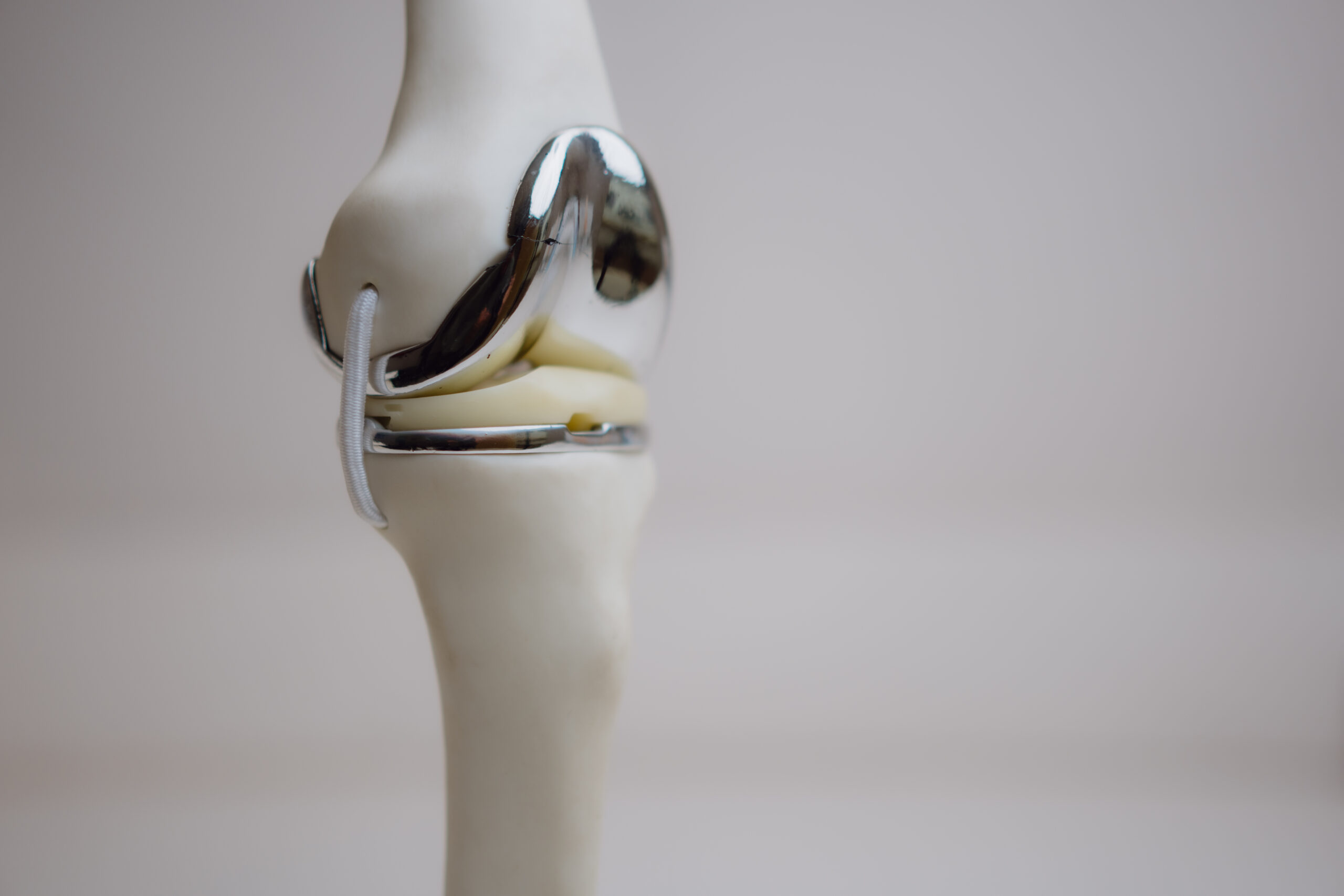
Total knee replacement resurfaces the entire joint, replacing worn cartilage and bone with smooth, durable components that recreate the natural movement of the knee.
The knee is made up of three compartments. When arthritis has affected more than one of them, resurfacing the whole joint produces a more reliable long-term result than treating a single area.
During the procedure, Dr. Morris removes the damaged surfaces from the end of the thigh bone, the top of the shin bone, and the back of the kneecap when needed. Each surface is replaced with a component designed to glide smoothly against the others.
These components are designed to:
- – Eliminate pain caused by bone on bone contact
- – Restore the natural alignment of the joint
- – Improve stability and range of motion
- – Return you to everyday activities
Total knee replacement is one of the most successful procedures in orthopedics, with the majority of patients experiencing significant improvement in both pain and mobility after recovery.
When Is A Total Knee Replacement Recommended?
-
Total knee replacement is recommended when arthritis or joint damage has progressed to the point where conservative treatment no longer provides meaningful relief.
Most patients reach this point gradually. Injections that once lasted months begin lasting weeks. Therapy helps less than it used to. The pain stops being something that flares up and becomes something that is simply there.
You may be a candidate when:
- – Knee pain is ongoing or steadily worsening
- – Walking, standing, or climbing stairs has become difficult
- – Stiffness limits your range of motion
- – Medications and injections no longer provide lasting relief
- – Imaging shows bone on bone contact across the joint
- – Pain regularly interrupts your sleep
The decision is based on your symptoms, your imaging, your overall health, and your personal goals. Dr. Morris will walk you through your X-rays directly and help determine if and when total knee replacement is the right step.
A MUSCLE-SPARING APPROACH TO TOTAL KNEE REPLACEMENT
Dr. Morris may use the subvastus approach to reach the damaged knee joint without cutting through the quadriceps tendon. Instead, he carefully works beneath the inner quadriceps muscle and moves the surrounding tissues aside.
By preserving these structures, the goal is to help your knee continue to:
-
– Stand and walk
- – Straighten your leg
- – Bend and control your knee
- – Begin moving during recovery
The goal of surgery remains the same: replace the damaged joint surfaces, relieve pain, and restore function. The difference is how Dr. Morris reaches the knee, which may help support earlier movement during recovery.
TOTAL VS. PARTIAL KNEE REPLACEMENT
Both procedures are designed to reduce knee pain and improve mobility, but the right approach depends on the extent of arthritis, the condition of your knee, and your individual needs.
TOTAL KNEE REPLACEMENT
A total knee replacement addresses damage across the knee joint by replacing the worn joint surfaces with artificial components. This procedure is generally recommended when arthritis affects multiple areas of the knee, causing persistent pain, stiffness, and limited mobility. For patients with widespread joint damage, total knee replacement can provide significant pain relief and help restore everyday function.
PARTIAL KNEE REPLACEMENT
A partial knee replacement focuses on just one damaged compartment of the knee, leaving the healthy portions of the joint intact. By preserving more of the knee’s natural structures, this procedure may allow for a less extensive surgery and a faster initial recovery. It is typically considered when arthritis is confined to one area and the remaining joint structures are healthy.
How do you know which is right for you?
The decision between total and partial knee replacement isn’t based on pain alone. Dr. Morris evaluates your symptoms, knee stability, imaging, and the location of joint damage to recommend the procedure best suited to your condition and long-term mobility goals.
TOTAL KNEE REPLACEMENT RECOVERY
Total knee replacement recovery is more streamlined than many patients expect. Most procedures are performed on an outpatient basis, allowing you to return home the same day and begin recovering in a comfortable, familiar environment.
WHAT TO EXPECT AFTER SURGERY
- – Most patients go home the same day
- – Walking typically begins the day of surgery
- – Physical therapy starts shortly after the procedure
- – Follow-up visits confirm proper healing and progress
- – Many patients return to daily activities within several weeks
Recovery continues over time as strength improves and swelling decreases, with the goal of lasting pain relief and improved mobility.
Your RECOVERY Is Personal To You
Every patient’s recovery after total knee replacement is different. Factors such as your overall health, mobility before surgery, and commitment to rehabilitation can all influence how quickly you regain strength and function.
While many patients begin walking the same day as surgery, full recovery takes time. Dr. Morris and his team will help you manage discomfort, improve your knee’s range of motion, and gradually rebuild strength. With a personalized recovery plan and ongoing guidance, the goal is to help you return to daily activities safely and with greater confidence.
Why Patients Choose Dr. Morris for TOTAL Knee Replacement
Finding the right orthopedic surgeon for a total knee replacement is an important decision. With over 25 years of experience serving Kerrville and the surrounding Texas Hill Country, Dr. Clint Morris brings extensive surgical knowledge and a personalized approach to helping patients overcome knee pain and mobility limitations.
Board-Certified in Orthopedic Surgery and Orthopedic Sports Medicine, Dr. Morris understands that successful knee replacement involves more than the procedure itself. From determining when surgery is necessary to selecting the most appropriate surgical technique, he focuses on each patient’s individual needs and long-term mobility.
What sets Dr. Morris’s approach apart?
-
– Extensive experience treating advanced knee arthritis and joint damage
-
– Careful evaluations to determine whether total knee replacement is the best treatment option
-
– A muscle-sparing subvastus technique that avoids cutting through the quadriceps tendon when appropriate
-
– Individualized treatment plans focused on pain relief, mobility, and functional recovery
-
– Patient education and guidance throughout the surgical and rehabilitation process
-
– Local surgical care options serving patients in Kerrville, Boerne, and Fredericksburg

We're Proud To Serve The Texas Hill Country At Our Three Locations
As an independent orthopedic surgeon, Dr. Morris has hospital privileges at multiple facilities. Patients may have surgical procedures performed in:
Kerrville
Address: 695 Hill Country Dr # C, Kerrville, TX 78028
Phone: 830-895-4466
Fax: 830-895-4465
Boerne
Address: Surgery Center of Boerne
112 Herff Road, Suite 200
Boerne, TX 78006
Phone: 830-895-4466
Fax: 830-895-4465
Fredericksburg
Address: Methodist Hospital Hill Country
1020 S. State Hwy 16, Fredericksburg, TX 78624
Phone: 830-895-4466
Fax: 830-895-4465
IS KNEE PAIN LIMITING YOUR DAILY LIFE? IT MAY BE TIME TO CONSIDER TOTAL KNEE REPLACEMENT.
When knee pain and stiffness make everyday activities difficult, you deserve to know your treatment options.
Dr. Morris will evaluate your symptoms, assess the extent of joint damage, and help determine whether total knee replacement surgery is the right step toward lasting relief and improved mobility.
Call today or request an appointment online.
How long is recovery after total knee replacement?
Most patients walk with a walker or cane within the first day or two and return to many daily activities over the next 6 to 12 weeks. Full recovery, including strength and endurance, can take several months. Your timeline depends on your age, health, and activity level, and Dr. Morris will give you a personal recovery plan.
How long does a total knee replacement last?
Today’s knee implants are designed to last many years, and many patients go 15 to 20 years or longer before needing any revision. Staying active, keeping a healthy weight, and following up with your surgeon all help protect your new knee.
Can I go home the same day after total knee replacement?
Many patients can. With Dr. Morris’s muscle-sparing approach, eligible patients may go home the same day as surgery, while others stay a night in the hospital. Whether same-day surgery is right for you depends on your overall health and support at home.
When is total knee replacement necessary?
Total knee replacement is usually considered when arthritis has damaged several areas of the knee and pain, stiffness, or swelling keep limiting daily life despite conservative care like activity changes, physical therapy, medication, or injections. Learn more in our post on signs you need a knee replacement.
What is the difference between a total and partial knee replacement?
A total knee replacement resurfaces all three compartments of the knee, while a partial knee replacement treats only the one damaged area. Partial replacement is an option when arthritis is limited to one part of the knee. Dr. Morris will review your X-rays and recommend the approach that fits your knee.
How painful is total knee replacement recovery?
Some pain and swelling are expected in the first weeks after surgery. Dr. Morris and his team use a pain management plan to keep you comfortable so you can start walking and therapy early, and discomfort typically eases as your knee heals and gets stronger.
Is there an ideal age for total knee replacement?
There is no set age. The decision is based on your pain, how much the knee limits your daily life, your X-rays, and your overall health, not your birthday. Dr. Morris treats adults of many ages and will help you decide on the right timing.
Office of Dr. Clint Morris
695 Hill Country Dr.
Kerrville, TX 78028
Phone: 830-895-4466
Fax: 830-895-4465
